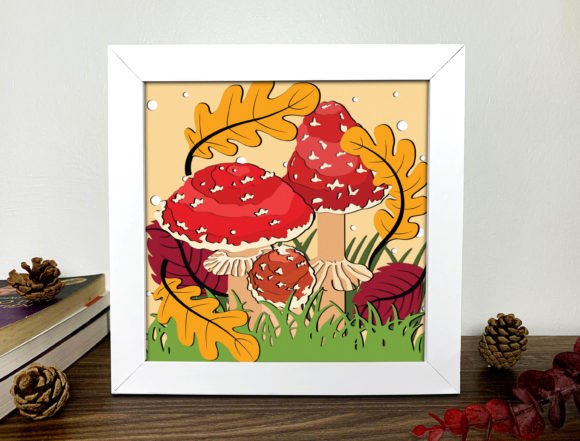
Crafting Depth: A Comprehensive Guide to the Autumn Mushrooms Shadow Box 3D SVG
The intersection of digital design and tactile craftsmanship has revolutionized how hobbyists and professionals approach paper art. Among the most captivating trends in this space is the creation of layered shadow boxes, specifically those capturing the intricate details of nature. The Autumn Mushrooms Shadow Box 3D Svg represents a pinnacle of this craft, offering a complex yet accessible pathway for creators to bring the forest floor into their homes or commercial projects. This guide explores the technical nuances, material considerations, and creative potential inherent in this specific digital asset, providing a roadmap for users ranging from novice crafters to seasoned designers.
Understanding the Architecture of Layered Paper Art
To fully appreciate the value of a 28-layer design, one must first understand the mechanics of paper layering. Unlike standard vinyl decals or single-cut silhouettes, a shadow box relies on the accumulation of depth. Each layer in the Autumn Mushrooms Shadow Box 3D Svg serves a distinct purpose, acting as a slice of a three-dimensional object viewed from a specific angle. When stacked with precise spacing, these flat sheets create an illusion of volume, light, and shadow that mimics real-world photography.
The complexity of twenty-eight layers is significant. In simpler designs, five to ten layers might suffice for basic shapes, but capturing the organic irregularity of mushrooms, falling leaves, and forest undergrowth requires granular detail. The digital file breaks down the image into these discrete planes. For the creator, this means the assembly process is akin to archaeological reconstruction; you are building the image from the background forward, or sometimes from the foreground back, depending on the desired framing effect. This architectural approach to crafting allows for a level of customization that pre-made physical products simply cannot offer.
The Significance of File Compatibility and Formats
A critical component of any digital crafting project is the versatility of the source file. The product in question provides four distinct file formats: SVG, DXF, PDF, and EPS. This diversity ensures compatibility across the entire spectrum of cutting machines and design software available on the market today.
- SVG (Scalable Vector Graphics): This is the native language of web-based design tools like Cricut Design Space and Silhouette Studio. It preserves vector data, allowing the design to be resized infinitely without losing resolution. For users of the Cricut Maker 3, this is often the preferred format due to its seamless integration with the software's layer management tools.
- DXF (Drawing Exchange Format): Historically the standard for CAD software, DXF is essential for users of older cutting machines or specific professional plotters that do not natively support SVG. It ensures that the geometric precision of the mushroom caps and stem details remains intact regardless of the hardware used.
- PDF (Portable Document Format): While primarily a viewing format, the inclusion of a print-ready PDF is invaluable for those who may not own a cutting machine but have access to a high-resolution printer. It allows for manual cutting or tracing, broadening the accessibility of the design to educators and classroom settings.
- EPS (Encapsulated PostScript): This format is the gold standard for professional graphic designers using Adobe Illustrator or CorelDRAW. It allows for advanced manipulation of the vector paths before sending the job to a cutter, giving professionals total control over node editing and path optimization.
By offering this suite of formats, the design removes technical barriers, ensuring that whether a user operates a high-end industrial plotter or a home desktop cutter, the integrity of the Autumn Mushrooms Shadow Box 3D Svg is maintained.
Material Selection and Color Theory in Paper Crafting
One of the most empowering aspects of purchasing a digital file rather than a physical kit is the autonomy it grants regarding material selection. The prompt notes that buyers can use paper of different colors to suit their preferences. This freedom is crucial because the final aesthetic of a shadow box is heavily dependent on the interplay of color and texture.
For an autumn-themed mushroom design, the choice of cardstock weight and finish can dramatically alter the mood. A matte finish cardstock tends to absorb light, creating soft, diffused shadows that enhance the cozy, earthy feel of a forest scene. Conversely, a slight shimmer or pearlized finish can catch ambient light, making the dew drops or wet mushroom caps appear lifelike. When working with 28 layers, the thickness of the paper becomes a mathematical variable. Standard 65lb cardstock is often ideal, providing enough rigidity to hold its shape without bowing, while still being thin enough that stacking twenty-eight sheets does not result in a block too deep for standard display frames.
Strategic Color Palettes for Seasonal Themes
While the digital file provides the shape, the creator provides the soul through color. An effective strategy for the Autumn Mushrooms Shadow Box 3D Svg involves utilizing an analogous color scheme. Starting with deep charcoals or dark browns for the rearmost layers creates a natural vignette and sense of distance. As the layers move forward, transitioning through burnt oranges, russet reds, and finally to vibrant yellows or creams for the focal mushrooms creates a pop of contrast that draws the eye.
Creators are encouraged to experiment with ombré effects, where each successive layer is slightly lighter or darker than the last. This technique enhances the 3D illusion, simulating the way light filters through a canopy. Furthermore, using textured papers—such as those with a linen finish or recycled fiber content—can add a tactile dimension that smooth cardstock lacks, reinforcing the organic nature of the subject matter.
Workflow Optimization for Complex Layering
Executing a project with twenty-eight layers requires a disciplined workflow to prevent confusion and ensure accuracy. The sheer number of individual cut pieces can be overwhelming if not managed correctly from the start.
- Pre-Cut Organization: Before loading the paper into the Cricut Maker 3 or any other cutter, label your sheets. Since the SVG file separates layers numerically or by name, matching these labels to your physical paper stack is essential. Many crafters use painter's tape to mark the layer number on the corner of each sheet.
- Cutting Strategy: When using a machine like the Cricut Maker 3, utilize the "Make It" preview to arrange pieces efficiently on the mat. For a project of this magnitude, you will likely require multiple mats. Ensure that the grain direction of the paper is consistent across all layers to prevent warping over time.
- Assembly Methodology: There are two primary schools of thought for assembly. The "Background First" method involves gluing the deepest layer to the backing board and building up towards the viewer. The "Foreground First" method involves assembling the main subject separately and then placing it into the frame. For the Autumn Mushrooms Shadow Box 3D Svg, the background-first approach is generally recommended as it allows for better alignment of the surrounding foliage and ground elements.
- Spacing and Adhesion: To achieve the 3D effect, foam adhesive squares or double-sided foam tape must be used between layers. The thickness of this spacer determines the total depth of the artwork. Consistency is key; using spacers of varying thicknesses can distort the perspective. Apply adhesive only to the structural points of the design to minimize visible glue lines.
Diverse Applications and Use Cases
The utility of this digital asset extends far beyond a single weekend hobby project. Its versatility makes it suitable for a wide array of applications across different sectors.
Home Decor and Interior Design: For homeowners, this design serves as a sophisticated piece of seasonal decor. Framed in a deep-set shadow box frame, it acts as a focal point in entryways or living rooms, bringing the warmth of autumn indoors without the perishability of real flora.
Educational Environments: Educators can utilize the PDF version of this file for biology or art classes. It serves as an excellent tool for teaching concepts of depth, perspective, and fungal life cycles. Students can engage in the cutting and assembly process, developing fine motor skills and an understanding of spatial relationships.
Commercial Product Creation: Small business owners and Etsy sellers can leverage this file to create inventory for the fall season. Because the file is compatible with all cutters, it scales well for small-batch production. The ability to customize colors allows sellers to offer bespoke options to clients, such as matching a specific brand palette or interior design scheme.
Therapeutic and Recreational Crafting: The repetitive and focused nature of weeding excess paper and aligning layers can be meditative. For hobbyists seeking a challenging yet rewarding project, the 28-layer count offers a substantial time investment that results in a high-value finished product.
Technical Considerations for Frame Selection
A common oversight in shadow box projects is the mismatch between the artwork depth and the frame capacity. With twenty-eight layers of cardstock plus adhesive spacing, the total depth of the Autumn Mushrooms Shadow Box 3D Svg assembly can range from 1.5 to 2 inches, depending on the spacer thickness used. Standard photo frames will not accommodate this volume.
Creators must seek out "deep set" or "shadow box" frames specifically designed for 3D art. The dimensions mentioned, 20x20cm (approximately 7.8x7.8in), fit perfectly into standard 8x8 inch frames, which are widely available. However, verifying the internal depth of the frame before beginning the project is a mandatory step. Additionally, the glass or acrylic front of the frame should be cleaned meticulously before sealing, as dust trapped between the layers and the glass is difficult to remove once the project is complete.
The Value of Digital Ownership and Community Sharing
Purchasing a digital product like this represents a shift towards sustainable crafting. Unlike physical kits that generate packaging waste and limit the user to a single attempt, a digital file allows for infinite iterations. If a mistake is made during the cutting or assembly process, the user can simply cut another piece without needing to repurchase a kit. This reduces waste and encourages experimentation.
Furthermore, the nature of digital crafting fosters a vibrant community. Creators are encouraged to share their finished versions of the Autumn Mushrooms Shadow Box 3D Svg with everyone. These shared observations provide invaluable feedback loops. Seeing how another crafter interpreted the color palette or solved a specific assembly challenge can inspire new techniques and approaches. This collaborative spirit elevates the entire crafting ecosystem, turning a solitary activity into a shared learning experience.
In conclusion, the Autumn Mushrooms Shadow Box 3D Svg is more than just a collection of vector paths; it is a comprehensive toolkit for artistic expression. By combining technical precision with creative freedom, it empowers users to produce professional-grade art. Whether utilized for personal enjoyment, educational purposes, or commercial ventures, the depth and detail offered by this 28-layer design stand as a testament to the capabilities of modern digital crafting. Through careful material selection, organized workflows, and thoughtful framing, anyone can transform a simple digital download into a tangible masterpiece that captures the essence of the autumn season.