Mastering the Shadow Box Spring 3D Layered SVG for Professional Craft Workflows
Integrating digital assets into a physical production line requires more than just a pretty design; it demands precision, compatibility, and a clear understanding of the file hierarchy. The Shadow Box Spring 3D Layered SVG represents a sophisticated approach to paper crafting, moving beyond simple single-layer cuts to create depth, dimension, and visual interest. For professionals, small business owners, and serious hobbyists, this asset is not merely a decorative element but a foundational component in a broader creative workflow. Whether you are preparing seasonal inventory for an Etsy shop, designing classroom materials, or creating bespoke home decor, understanding how to leverage this specific file type ensures efficiency and high-quality outcomes.
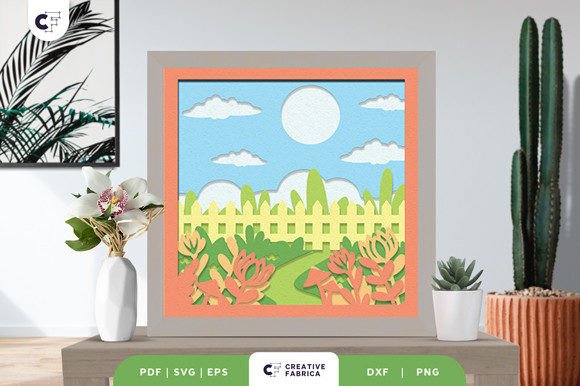
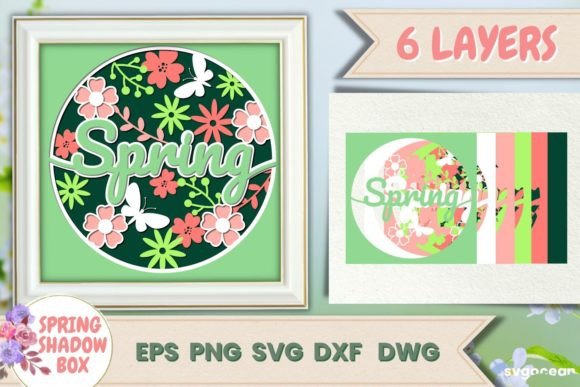
At its core, a shadow box design relies on the strategic stacking of multiple layers to simulate three-dimensionality. The Shadow Box Spring 3D Layered SVG provided in this package is engineered specifically for this purpose. Unlike standard clip art, this file separates foreground elements, mid-ground details, and background structures into distinct vectors. This separation is critical for the cutting process, allowing your machine to slice each layer individually so they can be assembled with foam adhesive or spacers. When utilized correctly, this transforms flat cardstock into a dynamic display that captures light and shadow, essential for spring-themed projects involving florals, butterflies, and renewal motifs.
File Versatility and Software Compatibility
A robust workflow begins with file accessibility. One of the primary advantages of this asset is its delivery in a comprehensive ZIP archive containing multiple industry-standard formats: SVG, PNG, EPS, DXF, DWG. This variety ensures that regardless of your preferred software ecosystem, the integration remains seamless.
For users operating within the Cricut Design Space or Silhouette Studio environments, the SVG file is the optimal choice. These vector files retain scalability without losing resolution, allowing you to resize the spring design from a small gift tag to a large wall hanging without pixelation. The layered structure imports directly, maintaining the separation of elements necessary for the 3D effect. Conversely, if your workflow involves Adobe Illustrator or Inkscape for pre-processing or customization, the EPS format offers advanced editing capabilities, enabling you to modify anchor points or alter color paths before sending the job to the cutter.
Industrial users or those utilizing CAD-based cutting systems will find the DXF and DWG files invaluable. These formats bridge the gap between graphic design and engineering-grade cutting, ensuring that complex curves and intricate spring details are interpreted accurately by high-end plotters. Even for raster-based workflows in Adobe Photoshop, the included high-resolution PNG serves as a reliable reference or a ready-to-print element for sublimation projects where cutting is not required. This multi-format approach eliminates bottlenecks, allowing teams to collaborate across different platforms without conversion errors.
Preparation and File Extraction Protocols
Before any creative execution can begin, proper file management is essential. The asset is delivered as a compressed ZIP file, a standard practice to bundle multiple formats efficiently. However, attempting to import a zipped file directly into cutting software will result in errors.
To ensure a smooth start to your project, you must extract the contents first. The process varies slightly by operating system but remains straightforward:
- For Mac Users: Locate the downloaded ZIP file in your Finder. Simply double-click the file. The macOS Archive Utility will automatically decompress the folder, revealing the individual SVG, PNG, and other format files ready for immediate use.
- For PC Users: Navigate to the download location in File Explorer. Right-click on the ZIP archive. From the context menu, select "Extract All..." Follow the on-screen prompts to choose a destination folder. Once extracted, you will have direct access to the raw vector files.
Establishing a consistent folder structure for these extracted assets is a best practice for long-term organization. Create a dedicated directory for "Spring Collections" or "3D Shadow Boxes" and store the extracted files there. This prevents the common pitfall of losing source files after a project is completed, allowing for easy re-orders or variations in the future.
Integrating the Asset into Production Workflows
The true value of the Shadow Box Spring 3D Layered SVG emerges during the production phase. For entrepreneurs and creators, time is a finite resource. This asset accelerates the design-to-production timeline by removing the need to manually separate layers or vectorize images from scratch.
In a typical workflow, the process begins with material selection. Because shadow boxes rely on depth, the weight and texture of the paper are crucial variables. Cardstock ranging from 65lb to 80lb is generally recommended to provide enough rigidity for the layers to stand apart without warping. Once the material is loaded, the user imports the SVG into their cutting software. Here, the pre-separated layers allow for precise mapping. You can assign different cut pressures or blade depths if your machine supports multi-tool operations, although most users will perform sequential cuts.
During the assembly stage, the layered nature of the file dictates the construction logic. Users typically work from the background forward. The base layer is adhered to the backing board, followed by successive layers separated by foam tape or dimensional adhesive dots. This step-by-step assembly mirrors the digital layering of the SVG file, providing a tangible connection between the digital plan and the physical product. For educators teaching craft workshops, this clear correlation between the digital file structure and the physical build makes the Shadow Box Spring 3D Layered SVG an excellent teaching tool for explaining spatial reasoning and design principles.
Quality Control and Consistency
Maintaining consistency is vital for small business owners selling handmade goods. When producing multiple units of a spring-themed decoration, slight variations in layer alignment can detract from the professional finish. Using a standardized SVG file ensures that every unit starts with identical dimensions and proportions.
To enhance quality control, consider creating a jig or template based on the background layer of the SVG. This physical guide helps align subsequent layers quickly and accurately during mass production. Additionally, because the file is vector-based, you can test cut a single layer on scrap material to verify blade sharpness and pressure settings before committing to expensive specialty papers. This iterative testing phase minimizes waste and ensures that the intricate details of the spring design—such as delicate flower petals or butterfly wings—are cut cleanly without tearing.
Furthermore, the scalability of the SVG format allows for product line expansion without new design costs. A single Shadow Box Spring 3D Layered SVG can be resized to create a cohesive collection ranging from greeting cards to large-scale wall art. This flexibility supports marketing strategies where a unified visual theme is applied across various price points and product categories.
Long-Term Utility and Adaptability
Beyond the immediate spring season, this asset offers long-term utility for planners and creators. The modular nature of layered SVGs allows for customization in future projects. Users can isolate specific elements, such as a floral cluster or a specific typography element, and repurpose them for other designs throughout the year.
For freelancers and agencies managing client accounts, having a library of high-quality, multi-format assets like this streamlines the response to diverse client requests. Whether a client needs a digital mockup (using the PNG) or a physical prototype (using the SVG/DXF), the file package covers all bases. This readiness enhances professional credibility and reduces turnaround time.
Ultimately, the successful implementation of the Shadow Box Spring 3D Layered SVG hinges on understanding its role within a structured workflow. From the initial extraction of the ZIP file to the final assembly of the 3D structure, every step benefits from the precision and versatility inherent in these vector formats. By integrating this asset thoughtfully, creators can elevate their output, ensuring that their spring projects are not only visually stunning but also produced with the efficiency and consistency required in today's competitive market.